
MAKE ROOM FOR MOVEMENT
Mobility for Beginners: Move With Comfort and Control
Mobility describes how you move through a range with control; flexibility concerns the range available. For a beginner, the useful aim is comfortable, manageable movement—not forcing a deeper stretch or matching another person's position.
General fitness education · Updated 1 October 2026 · ThriveShape
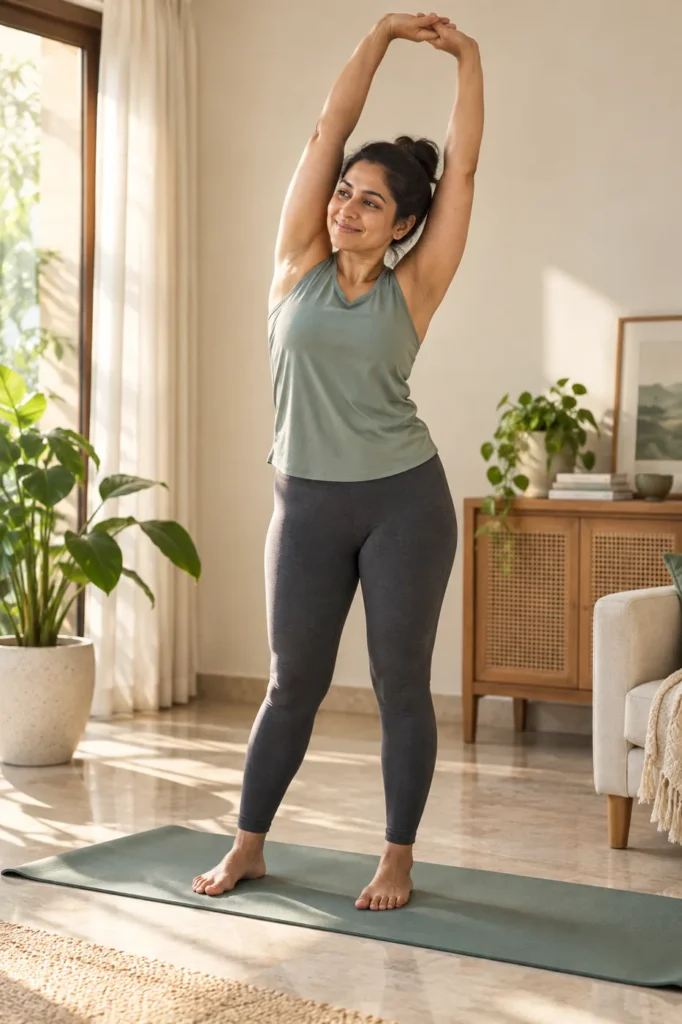
Illustrative editorial image; not an exercise demonstration.
Mobility, flexibility and strength work together
These terms overlap in everyday fitness language. We use mobility to mean practising controlled movement and flexibility to mean the available movement range. Strength contributes to controlling a movement, so these are not completely separate boxes in a routine.
You might notice these qualities when reaching, turning or sitting down and standing up. The NHS overview of strength and flexibility explains their role in daily activity. You do not need an unusually large range to make a routine useful, and an online image is not a test of how your body should move.
Start with the task you want to understand
Choose a familiar activity, such as preparing for a walk or learning a home exercise. Identify which part feels unclear: the starting position, the movement, the support or the amount. This is a better starting question than asking for the hardest stretch available.
Read or watch a reliable demonstration before trying something new. Use a smaller comfortable range while you learn. If balance or support is uncertain, seek instruction instead of improvising a setup. A restricted or painful movement can have different causes; this guide does not diagnose the reason.
A menu helps you choose without turning every practice into a full-body challenge. You could explore one gentle upper-body movement and one lower-body option from the NHS flexibility exercise guide, which includes illustrated starting positions. Select only examples that are appropriate and comfortable for you.
For instance, the NHS describes a seated head turn performed slowly within a comfortable range, and a supported calf stretch. Follow the source's positioning instructions rather than copying a still photograph on this site. These are options to learn, not exercises everyone must perform.
- Before practice: choose the movement, check the support and read the starting position.
- During practice: keep the movement controlled and avoid forcing range.
- After practice: note whether the instructions and setup worked for you; stop using an option that causes pain.
Put mobility in the right part of your session
Preparing for activity and practising a movement range are related but different tasks. Before a walk, an easier walking pace can help you ease into the session. Before strength practice, you may rehearse a familiar movement with a manageable version. A long stretching sequence is not a requirement for understanding every exercise.
Our warm-up and cool-down guide explains session transitions. Keep dedicated mobility practice separate in your plan when you want time to learn it without rushing. The useful choice depends on the activity and your own needs, rather than a rule that one sequence fits every workout.
Keep the rest of your routine in view
Do not let movement practice crowd out the other activities you are trying to build. The fitness foundations describe a balanced routine; Strength Training explains resistance, and Walking & Cardio covers aerobic activity.
For planning, attach one familiar practice to an existing session or choose a separate quiet moment. Record the movement and any support you used. Repeat a workable setup before collecting more exercises. This is an organisational suggestion, not a prescribed amount of mobility training.
Make progress about clarity and control
A useful review asks whether you understand the movement, can arrange the setup easily and can practise without forcing it. A deeper position is not the only possible change. You may simply become more consistent about choosing an appropriate option or recognising when you need help.
Avoid testing your maximum range every day or comparing your position with an instructor's. If a movement feels increasingly difficult, painful or unfamiliar, pause and ask for appropriate advice. Do not try to solve an unexplained restriction by pushing harder.
When to get individual guidance
If you have pain, an injury, a health condition, pregnancy-related concerns or uncertainty about a movement, ask a qualified healthcare professional about suitability. A qualified exercise professional can help with instruction when the movement is appropriate but the technique is unclear.
This page offers general adult fitness education. It does not provide rehabilitation, assess joint problems or promise relief from pain. Stop activity that causes pain or makes you feel unwell, and read the fitness disclaimer for the limits of written guidance.
Frequently asked questions
Is mobility the same as stretching?
Stretching can be one part of a movement practice. Mobility also includes how you control a movement and use the range available. The terms are often used differently, so look at the actual exercise instructions.
Should a stretch hurt?
Do not force a painful position. Stop and seek advice if a movement causes pain or you are unsure why it is uncomfortable.
Do I need a separate mobility workout every day?
There is no universal schedule in this guide. Choose practice that serves your activity and ability, and seek individual guidance when your needs are unclear.
A note on individual needs
This page offers general adult fitness education and adaptable planning examples. It does not replace a personal assessment, exercise instruction or medical advice. Read the fitness disclaimer.
How we prepare our guides explains sources, authorship and illustrative imagery. Explore Fitness Guides for your next question.