
UNDERSTAND RESISTANCE
Strength Training for Beginners
Strength training asks your muscles to work against resistance. Body weight, bands and weights can all provide resistance; the right starting choice is one you can use with control.
General fitness education · Updated 1 October 2026
Understand the basic terms
A repetition is one complete movement. A set is a group of repetitions performed before a rest. Resistance is the force you work against. Technique describes how you position and move your body during the exercise.
A routine usually brings together more than one movement pattern. You may practise sitting down and standing up, pushing, pulling and carrying with suitable variations. A qualified trainer can help you choose exercises when you need individual instruction.
Learn before adding difficulty
Use an easier version first and a range that feels comfortable. Breathe throughout; avoid deliberately holding your breath during a challenging effort. Move steadily enough to stay in control.
Start with movements suited to your balance, mobility and surroundings. NHS strength exercises includes supported beginner examples. Stop if a movement is painful rather than forcing your way through it.
See an adaptable home practice session for an example of learning familiar movements. The warm-up guide covers preparation, while Mobility explains comfortable range and control.
Plan for practice and recovery
Schedule sessions when you can pay attention and allow recovery after unfamiliar or demanding work. Use your next session to repeat and refine the same skills before adding complexity.
Write down the movement, resistance and repetitions you used. Note if technique changed toward the end. This is more informative than comparing yourself with someone lifting a different weight.
What does progressive training mean?
Progressive training gradually increases the challenge as you adapt. You might add a few repetitions, use a slightly greater range or increase resistance; you do not need to progress every session.For beginners, consistent practice matters more than a heavy load. Keep control and breathe throughout. Stop if your form changes, you cannot breathe comfortably or movement becomes painful. Rest until you can move with control again. Equipment is optional; choose a version that suits your space and support.
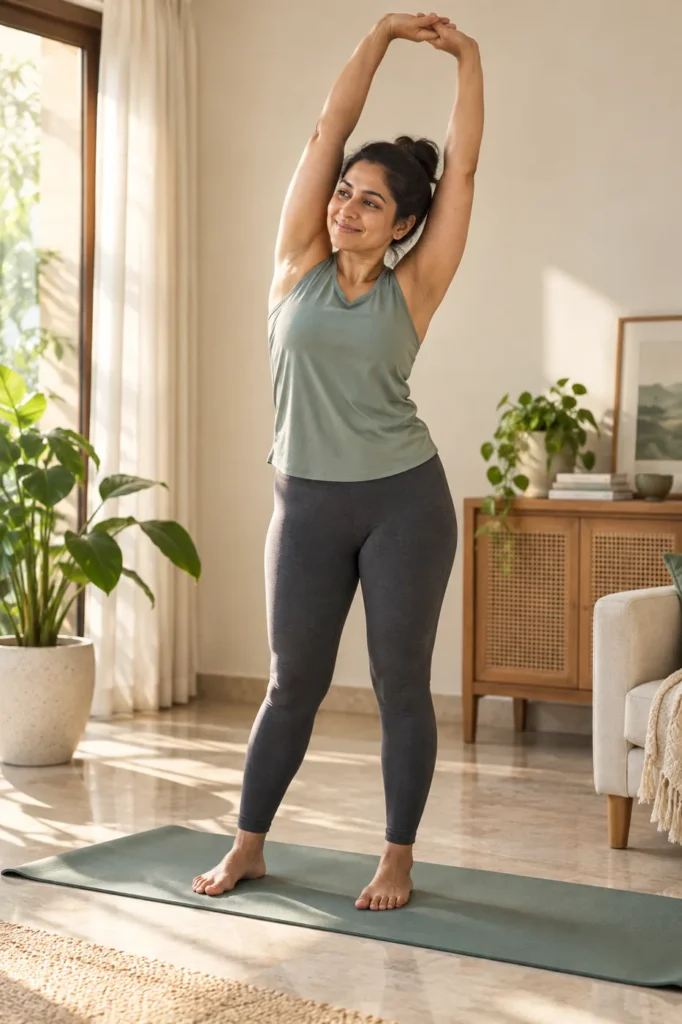
Increase one variable at a time. If control or recovery worsens, return to a manageable version. Progress is a process of learning what you tolerate, not a race toward a fixed number.
For example, suppose a familiar movement has felt controlled over several sessions. You could keep the variation and resistance the same and try a small change in repetitions. Compare the new amount with the old one before changing anything else.If you are rushing, shortening the movement unintentionally or struggling to recover, return to the manageable version. This illustrates a decision process, not a fixed progression schedule.
Beginner questions
Are bodyweight exercises strength training?
They can be, when the movement provides suitable resistance. Explore home workout options.
Do I need to feel sore?
No. Soreness is not a target or a reliable score for a good session.
What should I combine it with?
See Fitness for the roles of cardio, mobility and recovery.
Keep learning
Browse Fitness Guides · Read our editorial policy · Fitness disclaimer