
MOVE AT HOME
Home Workouts: Space, Setup and Session Basics
Home workouts are exercise sessions you do at home, using body weight, suitable supports or equipment. This guide helps beginners prepare a safe space, learn a simple home workout structure and choose an adaptable routine.
General fitness education · Updated 1 October 2026
Prepare your space before you start
Clear enough room to move your arms and legs without hitting furniture. Check that the floor is dry and that any chair or support is stable, without wheels. Keep loose objects, pets and trailing cables out of your movement area.
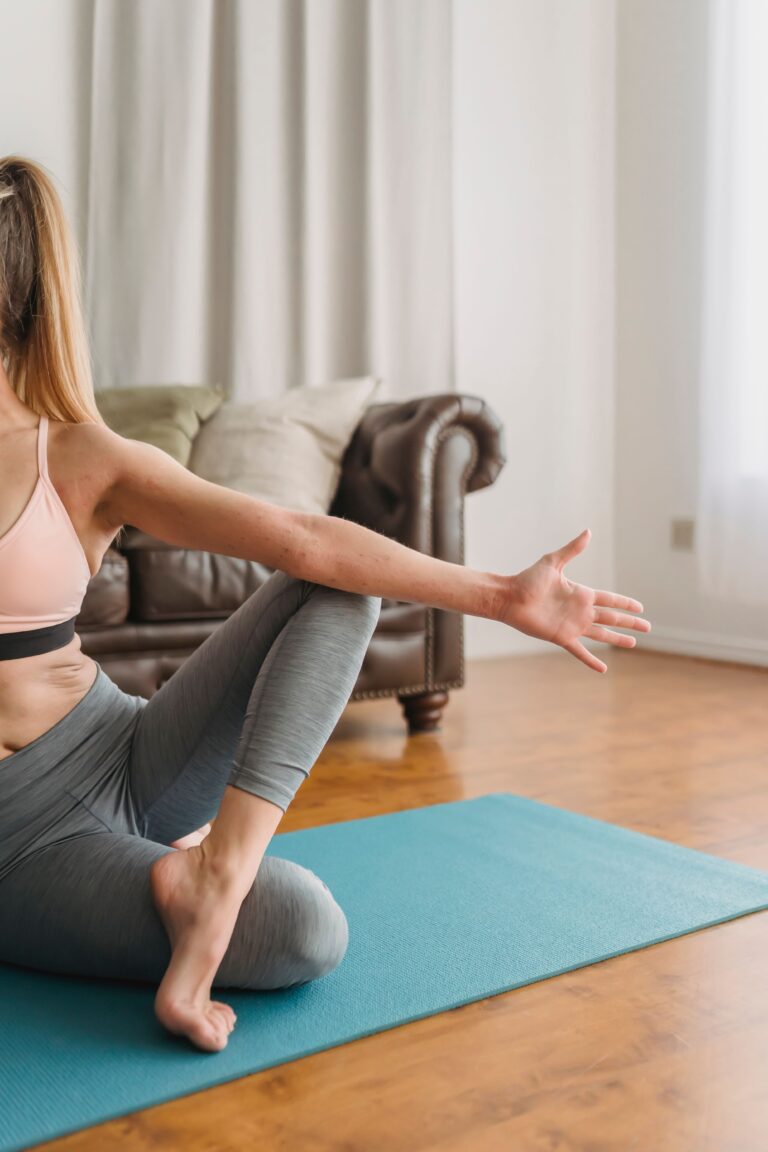
You do not need a dedicated home gym. A mat may improve comfort for floor work, but it is optional if your routine is standing. Choose clothing and footwear appropriate to the surface and activity.
Use the home workout equipment guide to decide what is necessary for your chosen movements and what can wait. Start with the activity and the space rather than a shopping list.
A simple structure for home workouts
Ease in: begin with gentle movement, such as an easy walk around the room.
Practise: choose a few movements you understand and can do comfortably.
Pause: take enough rest to keep control and breathe comfortably.
Ease out: reduce the pace and check how you feel.
Keep your first attempt short. Use the time to learn, not to test your limits. This framework can support a brief session or a longer one as your capacity develops.
The adaptable beginner home routine puts preparation, two example movements, rest and a gradual finish into one practice framework. Read the warm-up and cool-down guide for the start and end of a session.
Beginner movements to learn
Sit-to-stand: use a stable chair, position your feet securely and rise under control, then lower gently. Choose a higher seat or use support if needed.
Wall press-up: face a wall with your hands at a comfortable height; bend and straighten your arms with controlled movement. Moving closer can reduce the challenge.
Easy marching or walking: choose a stable surface and a pace you can manage.
These are examples, not a complete programme for every body. The NHS strength exercise guide shows starting movements and technique. Skip anything painful or unsuitable and seek help with adaptations.
No equipment does not mean no progression
Bodyweight exercises use your own mass as resistance. You can progress by changing leverage, range, repetitions or resistance—but change one factor at a time. A harder variation is useful only when you can perform it with control.
If you later add bands or weights, inspect equipment and use it as intended. More equipment is not a substitute for understanding the movement. Read strength-training basics.
Small spaces and short sessions
Choose stationary movements or a short indoor walking route. Avoid jumping near obstacles or on an unsuitable surface. A quieter, lower-impact option may fit shared housing better.
On busy days, use a shorter version of your usual session. Decide what you will do before you begin, keep transitions simple, and allow time to ease in and out.
Make recovery and consistency practical
Plan the next session around how you recovered from the last one. If you feel unusually tired or technique is deteriorating, simplify the session or rest. Record what worked so you can repeat it.
Keep useful equipment accessible and avoid turning every workout into a new challenge. Build a beginner routine around a small number of familiar choices.
Choose a normal version and a smaller fallback using the workout habit guide. Keep the option to rest; a shorter session is useful only when the activity is appropriate for you that day.
Home workout questions
Can I combine walking and home workouts?
Yes, if the amount fits your ability and recovery. They can serve different roles in your week.
Should I exercise every day?
Daily movement and daily demanding workouts are different. Include recovery, and choose a schedule that fits your current capacity.
Is this personal coaching?
No. ThriveShape provides general education. See the fitness disclaimer for its limits.
Keep learning
Browse Fitness Guides · Read our editorial policy · Fitness disclaimer