
START WHERE YOU ARE
Beginner Fitness Guide: How to Start Exercising
Start with manageable movement, repeat it, and build gradually. Your first routine should fit your current ability and your real week—not an ideal schedule you cannot keep.
General fitness education · Updated 1 October 2026
First, choose a sensible starting point
Write down the movement you already do: walking to shops, housework, stairs or time outdoors. Then choose one small opportunity to move a little more. If you are returning after illness, injury or a long break and are unsure what is appropriate, get individual guidance.
Prepare a clear space, supportive footwear when needed, and a stable surface. Learn what each movement should look and feel like before increasing speed or repetitions.
A flexible first-week example
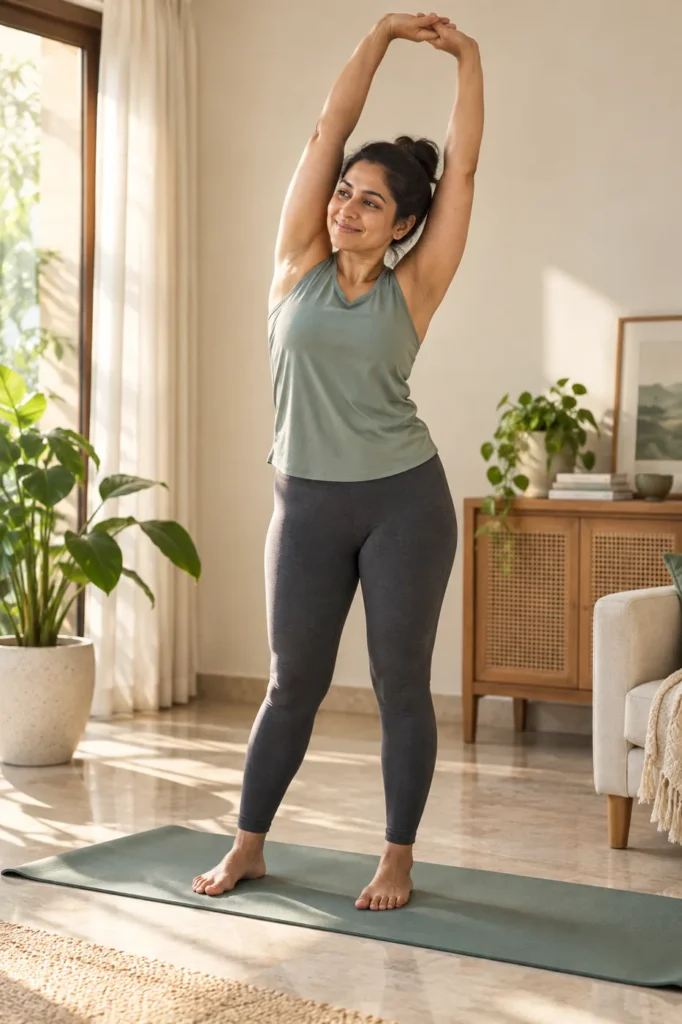
This example is an organising tool, not a personalised prescription. Shorten it, simplify it or add rest according to your ability and recovery. In beginner fitness, the goal is to choose sessions you can recover from and repeat.
Monday: a comfortable short walk.
Tuesday: practise a few easy strength movements.
Wednesday: rest or gentle everyday movement.
Thursday: repeat your comfortable walk.
Friday: rest.
Saturday: another short strength practice if recovered.
Sunday: review what felt manageable and plan the next week.
The point is to build a repeatable pattern. There is no requirement to make every session longer than the last. Learn home-workout options.
Use the beginner home practice session to understand preparation, movements and rest. If you prefer walking, the walking-plan guide helps you choose a route and decide when to repeat or adjust it.
How hard should it feel?
For early sessions, choose a pace at which you feel in control. Avoid copying the speed of an online instructor if it compromises your technique. Take breaks whenever you need them.
Muscle effort and pain are different. Stop for sharp pain, dizziness or symptoms that feel unusual. Chest pain, fainting and severe breathing difficulty need urgent medical help.
Beginner fitness: how often should you exercise?
For beginner fitness, adult public-health recommendations are a longer-term reference, not an immediate pass-or-fail target. Choose an amount of movement that feels manageable. Beginners can repeat comfortable sessions and adjust activity as confidence and recovery change. For broader context, read the WHO physical activity guidelines.
Leave recovery time between demanding sessions for the same muscles. An easy walk on another day may feel appropriate, but rest when you need it.
Decide which opportunities you can actually repeat before choosing a demanding frequency. For example, reserve a few suitable moments for movement, then decide whether each will be a walk, strength practice or rest based on your starting capacity. Review the amount after trying it; a calendar entry is not a requirement to exercise through symptoms or poor recovery.
Progress one thing at a time
When an activity feels comfortable across several sessions, add a little time or a few repetitions. Alternatively, make a movement slightly more challenging while keeping the amount steady. Changing all three together makes it harder to judge what you can recover from.
Record the activity, approximate duration and how it felt. This gives you useful information without needing elaborate tracking or a wearable.
Mistakes worth avoiding
Starting too hard: begin below your maximum and learn the movements.
Chasing soreness: soreness is not the aim of training.
Ignoring your schedule: choose a realistic time and a shorter fallback session.
Comparing bodies: focus on skills and habits you can influence.
Ignoring symptoms: stop and get appropriate help.
Build the habit around a reliable cue
Link movement to a predictable moment, such as finishing work or a regular break. Put what you need where you will see it. Decide your minimum version in advance—for example, a brief walk when a longer session is not practical.
If you miss a day, resume with an appropriate session rather than trying to make up everything at once. A routine should be adaptable enough to survive ordinary life.
For a practical way to organise both options, read how to keep a workout habit when your week changes. Choose the fallback in advance so a busy day does not require a completely new plan.
Questions beginners often ask
Do I need to lose weight before starting?
Fitness education is for people at different sizes. Choose activity suitable for your current health and ability; body size is not a training plan.
What if I cannot do an exercise?
Use an easier variation or another movement. A qualified professional can help when adaptations are unclear.
Where next?
Keep learning
Browse Fitness Guides · Read our editorial policy · Fitness disclaimer