
THRIVESHAPE JOURNAL
What Do You Actually Need for a Home Workout?
Start with a clear, suitable space and movements you can control. Equipment should solve a specific need; it is not a prerequisite for every useful home workout.
Published 1 October 2026 · Updated 1 October 2026 · ThriveShape
Begin with the room, not a shopping list
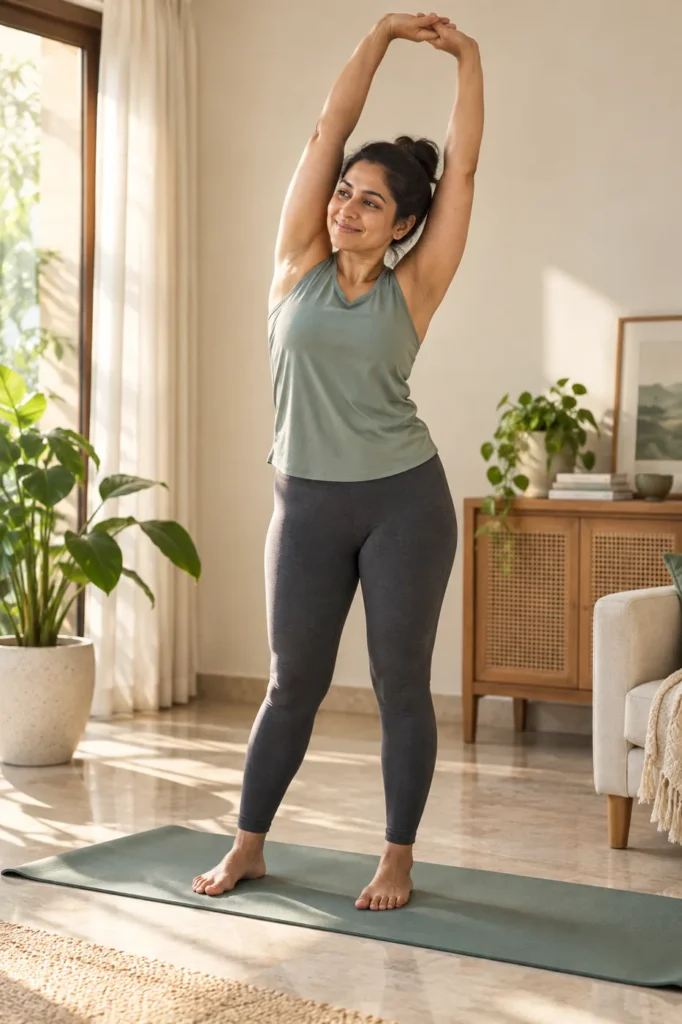
Check the floor, nearby furniture and the space needed for your chosen movements. A chair used for support must be stable and must not slide or roll. Leave enough room to stop or change position without bumping into something.
Noise, neighbours and flooring also matter. A low-impact standing routine may suit your space better than jumping. Choose the activity first, then decide what it needs.
Separate essentials from preferences
Comfortable clothing, an appropriate surface and any necessary stable support are practical starting considerations. A mat can improve comfort during floor work, but may be unnecessary for a standing session.
A timer or notebook can help you organise a session. A subscription, smartwatch or matching equipment set is optional. Avoid buying several items before you know what you will use.
When a band or weight could help
Additional resistance can be useful when a movement becomes manageable and you want an appropriate progression. Choose equipment you understand, with room to use it safely. Inspect it for damage and follow the manufacturer’s instructions.
Do not improvise unstable anchors for resistance bands or use furniture for a purpose it cannot safely support. Get qualified instruction if a setup or technique is unclear. Strength Training explains progression before equipment choices.
Make one purchase decision at a time
Write down the problem the item should solve: comfort on the floor, a specific form of resistance, or organising your space. Check dimensions, storage and suitability for your routine. If you cannot name the need, continue learning with what you already have.
The best setup is the one that supports a manageable routine. There is no reason to recreate a gym in your living room before your first session.
Before buying more, see how the setup works in an adaptable beginner home session. If the main obstacle is a changing schedule, the workout habit guide can help you plan a smaller fallback.
Frequently asked questions
Can I start without equipment?
Many movements use body weight and ordinary stable support. Suitability still depends on the exercise and your ability.
Should I buy heavier weights to save money later?
Choose resistance you can currently control. A weight that compromises technique is not a useful starting point.
What should I do next?
Use the Home Workouts guide to plan the space and structure of a session.
Read next
Beginner Fitness · Home Workouts · Editorial Policy
Browse all fitness articles for more focused reading.
A note on individual needs
This article offers general education and practical planning ideas. It does not replace personalised exercise instruction or medical advice. Read the fitness disclaimer.
Keep building your fitness foundations.
Explore Beginner Fitness, Home Workouts and the Fitness Guides for your next practical step.
Published by ThriveShape. AI assistance, sources and review information · Request a correction · Fitness guidance limits.