
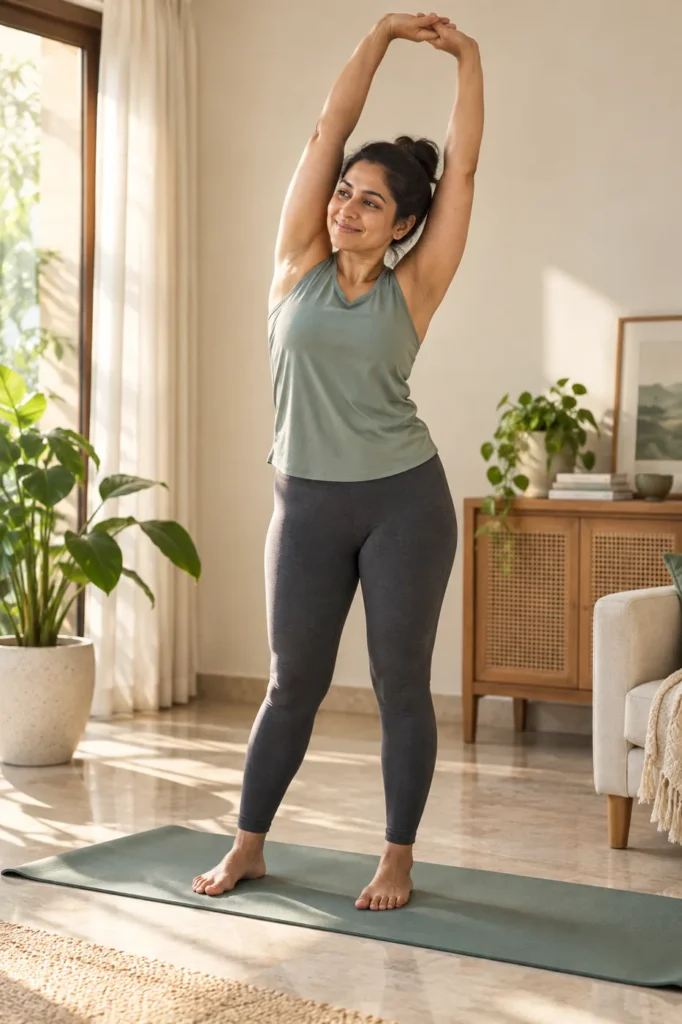
Your first strength session at home does not need to be complicated. Choose a few familiar movements, clear a safe space, and use a version you can control. This checklist helps you prepare, practise and review a first session at home. For the broader basics, read our beginner strength training guide.
Contents
Before you begin: make the session manageable
- Choose a clear space. Check the floor, nearby furniture and any support you plan to use. Keep water within reach and wear clothing that lets you move comfortably.
- Pick familiar movement patterns. A sit-to-stand from a stable chair, a wall push-up or another movement from a trusted beginner resource may be easier to learn than a complicated exercise. Choose movements that suit your balance, mobility and surroundings.
- Decide what resistance you can control. Body weight can provide resistance; equipment is optional. If you use a band or weight, start with a manageable option and follow its instructions. Do not choose a load just because someone else uses it.
- Set a simple plan. Write down the movements you chose and where you will get guidance on them. Keep the first session brief enough that you can focus on how each movement feels. There is no need to test a maximum or race through repetitions.
During the session: use control as your guide
Move at a pace that lets you stay balanced, breathe normally and pay attention to your position. Use a smaller range or an easier variation if that helps you remain in control. Rest when you need to. If you cannot keep the movement steady, the current version may be too difficult for today.
Notice the difference between effort and a warning sign. Stop if a movement is painful or you feel unwell. NHS guidance says to stop exercise if you feel pain or become unwell; it also advises checking with a healthcare professional first if you have a health problem, injury, symptoms, a recent health event, or are unsure whether an exercise is suitable. See the NHS strength and flexibility exercise guidance for its full safety notes.
After the session: record what you learned
- Which movement felt familiar and controlled?
- Did you need a support, easier variation or longer rest?
- Was the space suitable?
- What would you repeat next time?
Use those notes to decide what to practise again. When a movement feels controlled over repeated sessions and recovery is comfortable, you can consider a small change, such as a few more repetitions or a slightly more challenging variation. Change one thing at a time; there is no need to increase difficulty every session. Our adaptable beginner home workout routine shows how familiar movements can fit into a session, and our guide to warm-ups and cool-downs covers preparation and finishing your workout.
How does a first session fit into a weekly routine?
Think of the first session as practice, not a test. General U.S. public-health guidance says adults should include muscle-strengthening activity on at least two days each week, and people who are inactive can start with small amounts and build over time. That is a broad population guideline, not a personal prescription or a requirement for your first week. Read the Physical Activity Guidelines questions and answers for context, and adapt activity to your circumstances.
Quick checklist
- My movement space is clear and stable.
- I chose familiar movements and a manageable version.
- I know where to find reliable instructions.
- I can breathe and move with control, and I will rest when needed.
- I will stop if I feel pain or become unwell.
- I will note what I want to practise next time.
This article provides general fitness education, not an individual assessment or medical advice. If you have a health concern, injury, symptoms or uncertainty about exercise, seek guidance from a qualified healthcare professional. Start with the ThriveShape fitness disclaimer and editorial policy for more on the limits of our educational resources.
Keep building your fitness foundations.
Explore Beginner Fitness, Home Workouts and the Fitness Guides for your next practical step.
Published by ThriveShape. AI assistance, sources and review information · Request a correction · Fitness guidance limits.